

 TH
TH MM
MM
A vaginal yeast infection is one of the most common causes of vaginal itching in women. Although it is not a serious disease, it can cause discomfort and significantly affect confidence in daily life, especially when symptoms such as itching, burning, or cottage cheese-like vaginal discharge occur.
Let’s clearly understand what a vaginal yeast infection is, what causes it, what the risk factors are, the symptoms that may indicate an infection, as well as treatment approaches, self-care, and ways to prevent recurrence. This article also includes frequently asked questions that many people are concerned about. If you are currently experiencing itching, burning, or abnormal vaginal discharge, you should see a doctor to determine the cause.


What Is a Vaginal Yeast Infection?
A vaginal yeast infection (Vaginal Candidiasis or Yeast Infection) is a condition in which yeast that naturally exists in the vagina grows excessively, causing inflammation and various symptoms such as itching, burning, irritation, or abnormal vaginal discharge.
How Common Is It?
- It is very common among women. Up to 70% of women have had a yeast infection at least once in their lifetime.
- Women who experience recurrent infections account for 5–8% (recurrent infection occurring 4 times a year or more).
Reference: Gunter, J. (2019). *The Vagina Bible: The Vulva and the Vagina – Separating the Myth from the Medicine.*
Is It Dangerous?
It is not dangerous and does not develop into a serious disease. It is a common condition that can occur in women. However, it can be very bothersome because the itching can be severe. In most cases, the itching is intense enough to interfere with sleep, and frequent scratching may cause skin wounds. It can also become an obstacle during sexual intercourse because of the itching.
Causes of Vaginal Yeast Infection
A vaginal yeast infection is caused by a fungus called Candida albicans, which can normally be found in the body, especially in the intestines and around the anus.
Because the anus is located close to the vagina in women, the fungus can spread into the vaginal area more easily.
Normally, the vagina has a mildly acidic environment that helps prevent yeast from growing excessively. However, when the vaginal balance is disrupted, such as when the acidity decreases, the yeast can multiply more rapidly and cause symptoms such as itching, abnormal vaginal discharge, or burning and irritation.
Symptoms of Vaginal Yeast Infection
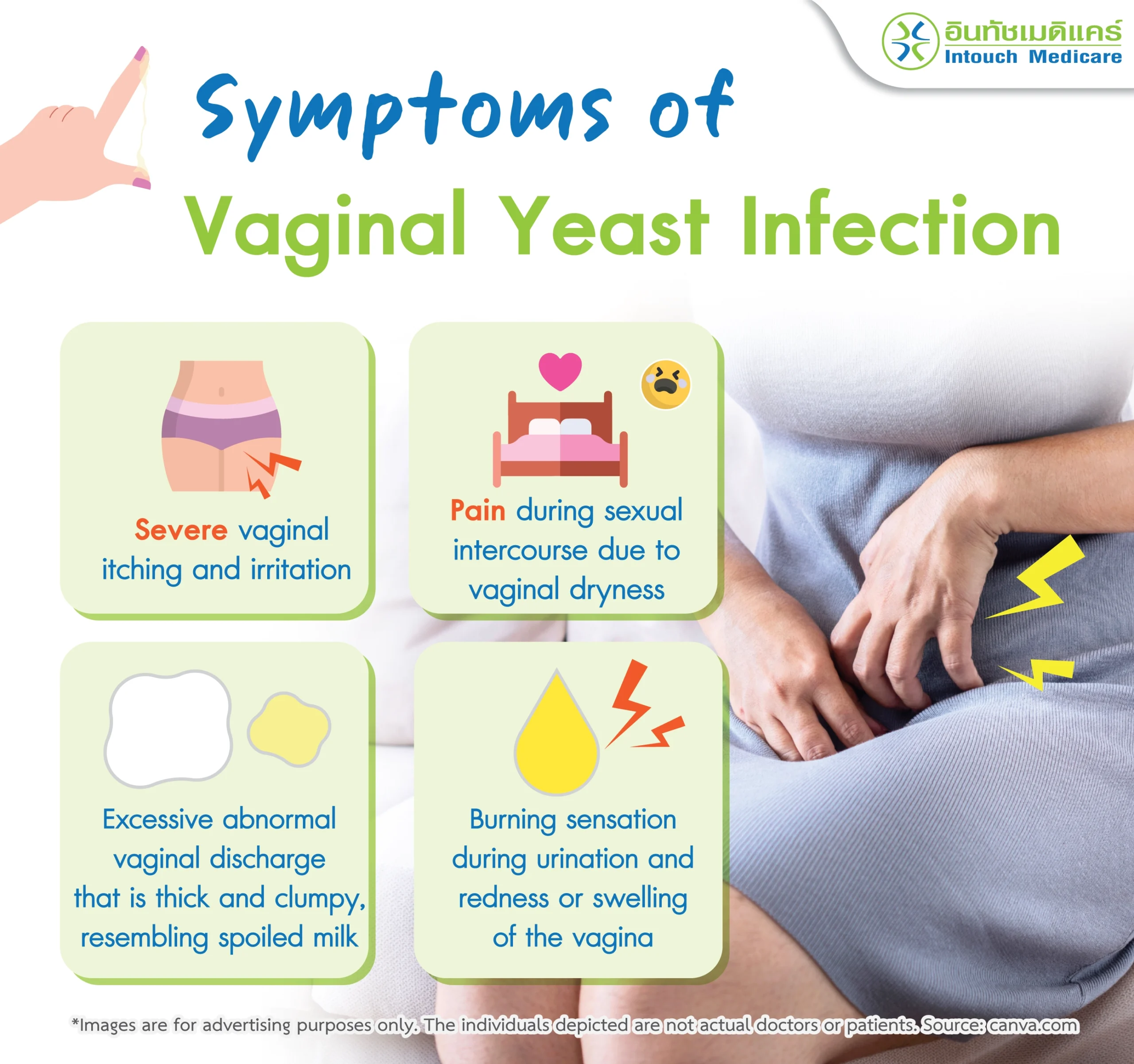
- Severe vaginal itching and irritation, with itching intense enough to cause vaginal swelling
- Pain during sexual intercourse due to vaginal dryness
- Excessive abnormal vaginal discharge that appears in clumps, resembling yogurt or a paste-like substance. In some cases, it may be watery and resemble spoiled milk. The discharge may be white, although some women may experience yellow vaginal discharge.
- More severe symptoms include a burning sensation during urination and redness or swelling of the vagina.
Risk Factors
Health and Hormonal Factors
- A weakened immune system, use of immunosuppressive medications, or HIV infection
- High estrogen levels (such as during pregnancy or from certain birth control pills)
- Diabetes that is not well controlled
- Small vaginal wounds caused by scratching, friction, or sexual intercourse, which may weaken the vaginal lining and allow yeast to enter the vagina more easily
- An imbalance of the normal microorganisms in the vagina
Medication-Related Factors
- Frequent use of antibiotics, 💊 which can reduce the number of beneficial bacteria in the vagina, allowing yeast to grow in their place. This may lead to increased vaginal discharge and moisture.
- Use of certain contraceptive pills, which may alter the vaginal pH balance and increase the risk of vaginal inflammation and yeast infection.
Daily Lifestyle Factors
- Wearing tight-fitting pants or clothing that traps moisture
- Wearing underwear with poor ventilation
- Vaginal douching 🚿
- Using harsh soaps or antiseptic cleansers on the intimate area 🧼
- Stress, insufficient sleep, or poor nutrition. When the body becomes fatigued, the immune system weakens, making infections more likely to occur.


How to treat vaginal yeast infection
Vaginal yeast infections can be treated with antifungal medications, which are available in several forms:
- Vaginal suppositories, used for 1–7 days (depending on the medication)
- Oral medications, such as fluconazole
- Topical creams to relieve itching or irritation around the vaginal opening and anal area
In general, symptoms such as itching or burning usually improve within 1–3 days after starting treatment.
Why Should You See a Doctor Before Treatment?
Although the symptoms may appear to be caused by a vaginal yeast infection, itching, abnormal vaginal discharge, or burning during urination can actually be caused by other conditions, such as:
- Bacterial vaginosis
- Certain sexually transmitted infections (STIs)
Self-Care and Prevention of Vaginal Yeast Infections
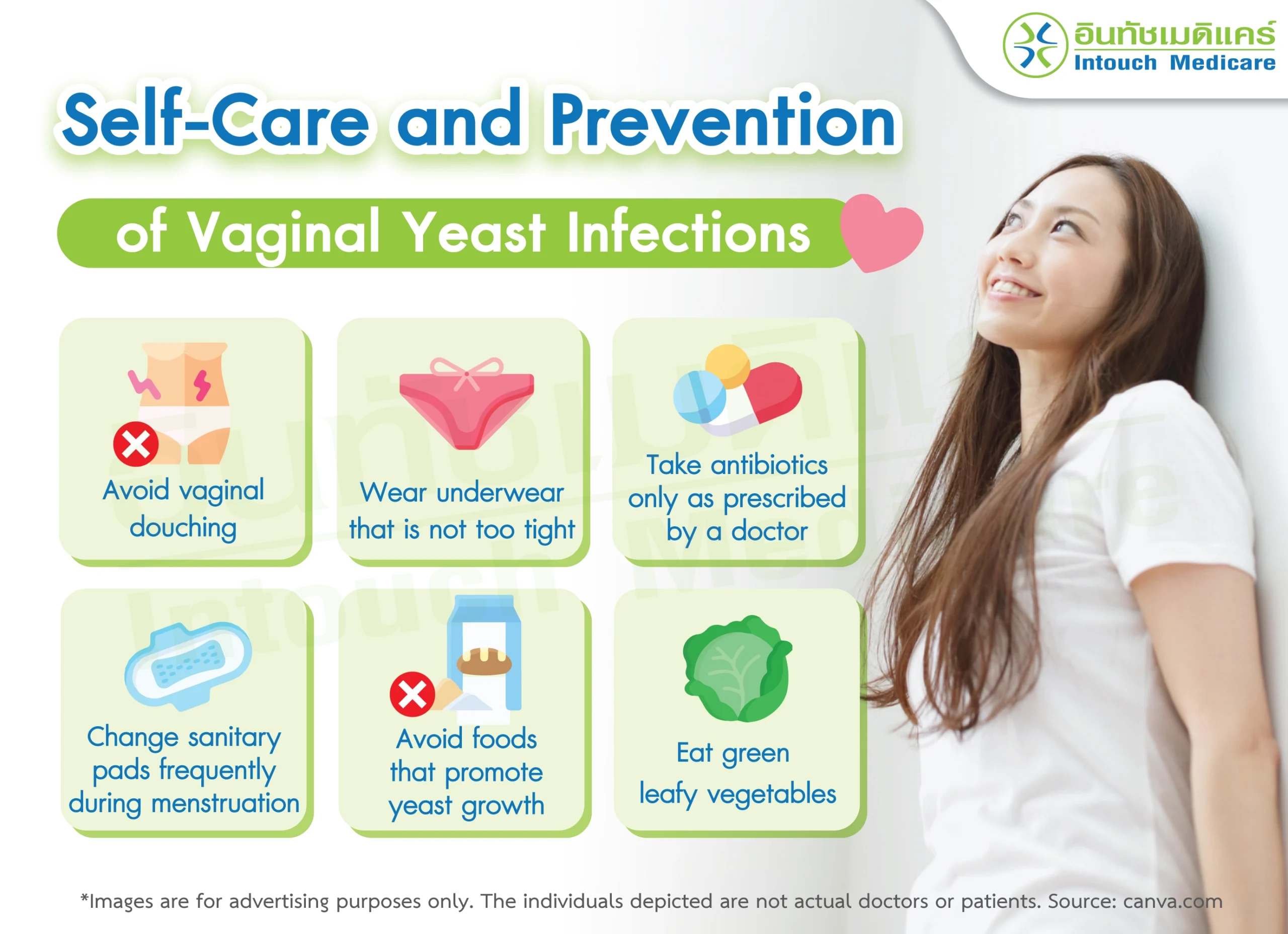
- Adjust your daily habits by avoiding vaginal douching. Cleaning the external genital area with water or a mild soap is sufficient.
- Wear underwear and pants that are not too tight and allow good airflow to prevent moisture buildup.
- Take antibiotics only as prescribed by a doctor and avoid overusing them.
- During menstruation, change sanitary pads frequently and do not leave them on for extended periods.
- Avoid foods that yeast tends to thrive on, such as sugar, refined carbohydrates, fruit juices, processed foods, cow’s milk that may promote inflammation, and alcohol.
- Eat green leafy vegetables such as kale, bok choy, Chinese kale, and spinach. These vegetables are beneficial for health, low in sugar, and rich in magnesium, vitamins, and antioxidants, which help support the body’s immune system.
Frequently Asked Questions
Interesting Article
- Gynecology Clinic: Women’s Health Checkups by Specialist Doctors
- Yellow Vaginal Discharge, Itching, and Odor: Is It Dangerous? Causes, Symptoms, and Treatment
- Female Genital Itching or Vaginal Itching: Causes and Treatment at Our Clinic
- Vaginal Itching: Check the Symptoms, Causes, Associated Conditions, and Treatment Options
References
- Everything Women Need to Know, Editorial Team. Klai Mor Publishing.
- Gunter, J. (2019). The Vagina Bible: The Vulva and the Vagina – Separating the Myth from the Medicine.
For more info and make appointment

Intouchmedicareclinic
Medical Clinic
 Lastest edited : 29/06/2026
 Images may be used without prior permission exclusively for educational or informational purposes, as long as proper credit is given to intouchmedicare.com