

 TH
TH
Red bumps on the penis head without itching can be a source of concern for many. However, in reality, most of these bumps are harmless and are simply normal physiological conditions or mild irritations. Nevertheless, understanding their characteristics and various causes is crucial for initial symptom assessment and deciding whether a doctor’s visit is necessary.
This article will help clarify common questions about non-itchy red bumps on the penis head, covering their general appearance, common causes, signs that may indicate a serious problem, and proper initial self-care guidelines.
1. What do non-itchy red bumps on the penis head look like?
Non-itchy red bumps on the penis head can have various appearances, which often help in identifying the initial cause. Common physical characteristics include:
- Size: They can be very small, like red dots, or small raised bumps measuring 1-3 millimeters.
- Color: Generally, they are skin-colored, pale pink, or slightly dark red.
- Shape: They may be round, slightly raised, smooth, or resemble sago grains. They are often scattered around the glans penis.
- Distribution: Sometimes they appear as single bumps, but more often they are found in small clusters or rows along the rim of the glans penis.
- Sensation: By nature, these bumps do not cause itching, pain, burning, or discharge.
Understanding these characteristics will help you make an initial assessment of whether the bumps are likely to be a harmless condition.
2. What are the common causes of non-itchy red bumps on the penis head?
Most causes of non-itchy red bumps on the penis head are harmless conditions that do not require treatment, including:
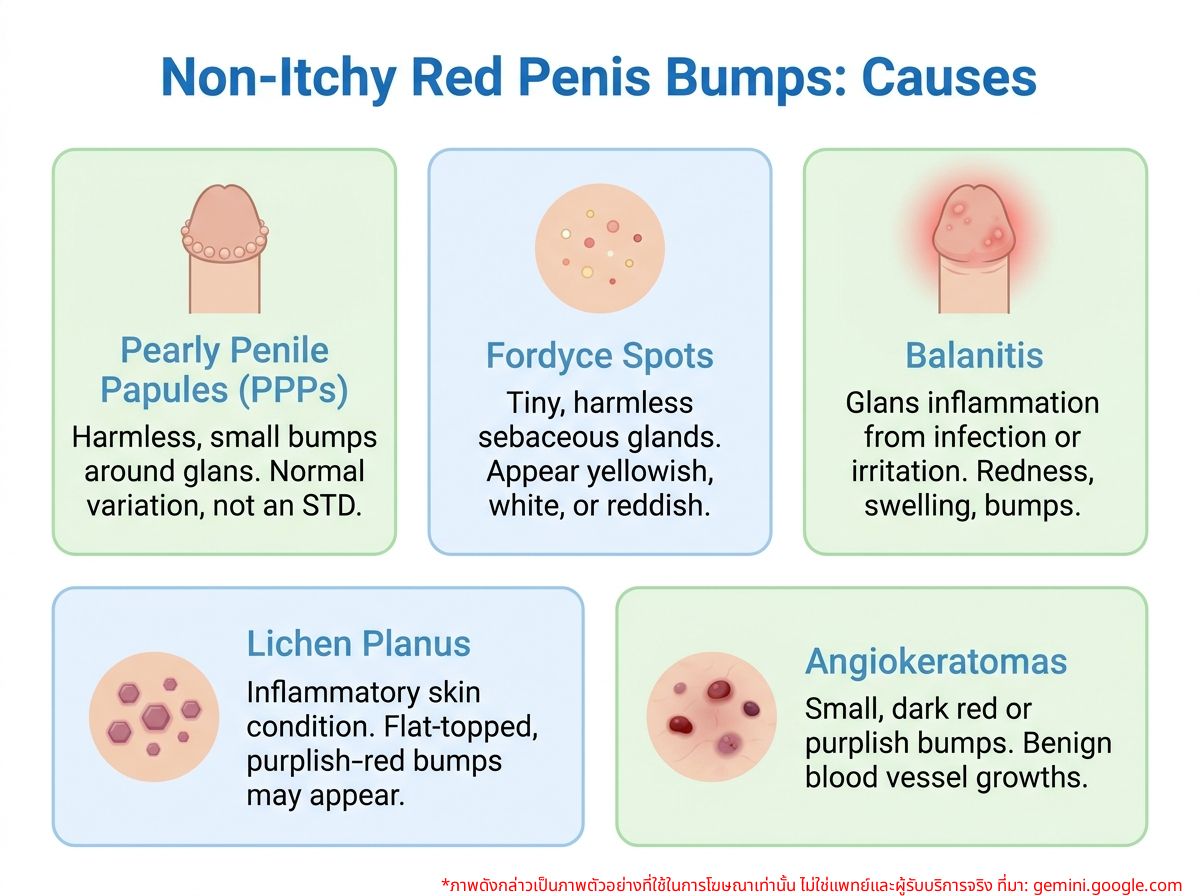
Pearly Penile Papules (PPP)
This is a very common condition in men, appearing as small, skin-colored or whitish-pink bumps arranged in one or two rows around the coronal sulcus of the glans penis. They are typically 1-3 millimeters in size, non-itchy, painless, and not sexually transmitted. It is a normal physiological condition resulting from the enlargement of sebaceous glands or tiny blood vessels under the skin. They often become more noticeable during adolescence and do not disappear on their own, but they are not harmful.
Fordyce Spots
These are sebaceous glands that appear as small, pale yellow, white, or flesh-colored spots on hairless skin, such as the lips, cheeks, and male genitals. They can be found on the glans penis and other areas. This is a harmless, non-itchy, painless, non-contagious condition that does not require treatment.
Non-itchy Balanitis (Inflammation of the Glans Penis)
In some cases, inflammation of the glans penis can occur due to various reasons, such as irritation from soap, chemicals, or minor fungal/bacterial infections. Itching may not be prominent, but small red patches or scattered red bumps may be visible. Good hygiene practices often help improve the condition.
Irritation from Friction or Chemicals
Friction from tight clothing, the use of harsh cleaning products, or allergic reactions to certain chemicals, such as fragrances in soap, can cause irritation and small red bumps to appear, often without prominent itching. Symptoms usually improve when the irritant is avoided.
💡 Did you know? Pearly Penile Papules (PPP) are found in approximately 1 in 3 men and are considered a normal anatomical variation with no association whatsoever with sexually transmitted infections!
Understanding Normal Anatomical Variations of the Male Genitals
In reality, the skin of the male genitals is delicate and has unique characteristics that differ from other parts of the body. The presence of small, non-itchy bumps indicating a normal, harmless condition is more common than many people realize. Understanding what is “normal” can significantly reduce unnecessary anxiety.
Pearly Penile Papules and Fordyce Spots are good examples of conditions often mistaken for diseases, but are actually just normal anatomical variations in individuals and do not require any treatment, unless there is a cosmetic concern, in which case a doctor can be consulted for appropriate options.

3. Can non-itchy red bumps on the penis head be a dangerous sign of a serious disease?
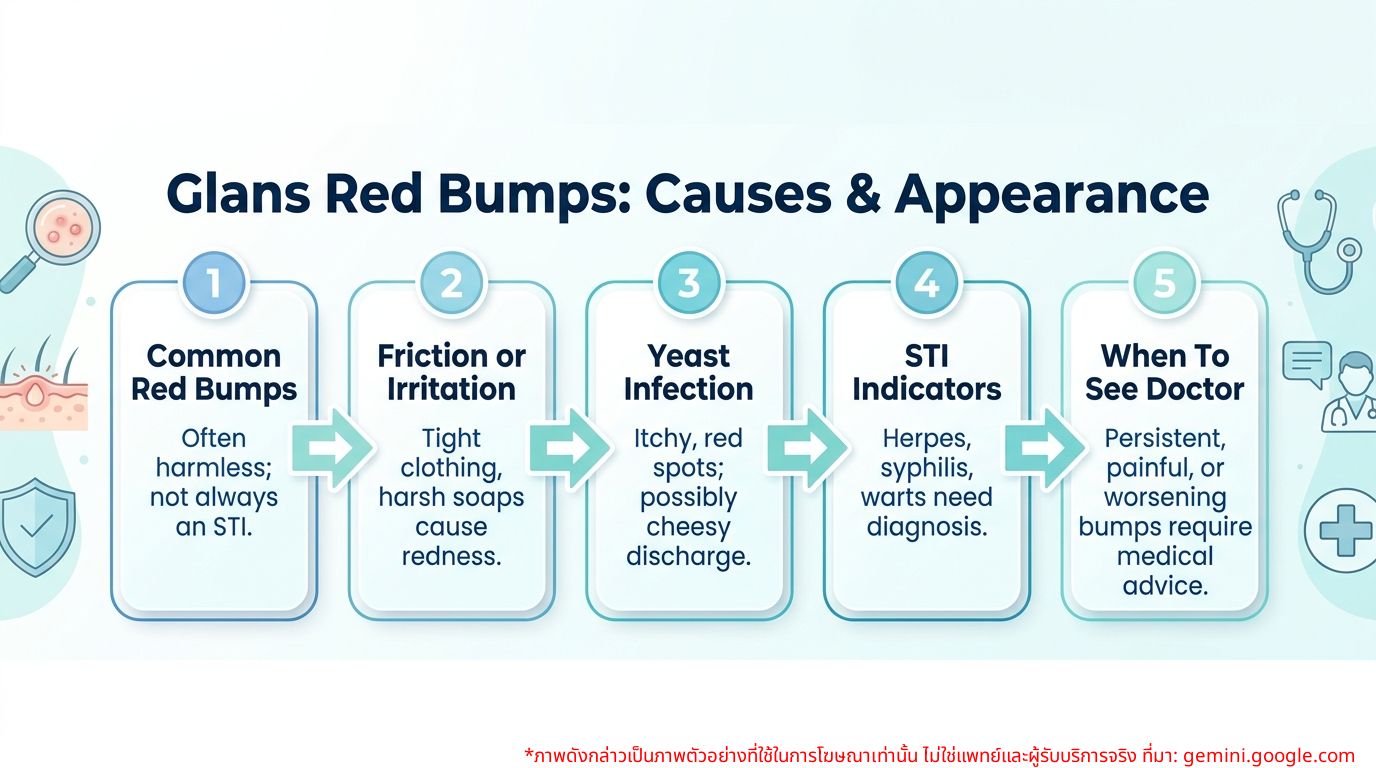
While most non-itchy red bumps are harmless, in some cases they can be a sign of more serious problems that require medical diagnosis, including:
Certain Sexually Transmitted Infections (STIs)
- Syphilis: The primary stage of syphilis appears as a chancre, which is a red bump or sore that is painless, non-itchy, and often has raised edges. This sore may heal on its own, but the infection remains and will progress to later stages if left untreated.
- Genital Warts (HPV): In the initial stages, warts may be very small, pink or flesh-colored, and may not yet cause itching or pain. They appear as raised, rough bumps resembling a rooster’s comb or cauliflower, and may appear as a single bump or multiple bumps.
Unsafe sexual practices are a significant risk factor for these infections. If you have concerns about your sexual history or suspicious symptoms, you should consult a doctor promptly.
Precancerous Conditions or Penile Skin Cancer
Although very rare, non-itchy red bumps can be a sign of more serious conditions, such as Erythroplasia of Queyrat (a precancerous condition for squamous cell carcinoma) or penile skin cancer. These often appear as persistent sores, red patches, or raised bumps on the glans penis that do not heal, and may have irregular borders or abnormal coloration. Close observation of any changes in the bumps is advised.
Signs that warrant particular concern:
- The bump does not disappear on its own or grows larger.
- Its characteristics change, such as altered color, shape, or irregular borders.
- Other symptoms are present, such as bleeding, pus, pain, or swelling.
- There is a history of unsafe sexual practices or multiple partners.
- You feel significant concern.
4. When should you see a doctor for non-itchy red bumps on the penis head?
While most non-itchy red bumps are harmless, seeing a doctor for diagnosis will help you gain confidence and receive proper care. You should consult a doctor without delay if you experience any of the following symptoms:
- Persistent bumps: If the bumps remain for several weeks or months without showing signs of disappearing on their own.
- Suspicious changes: If the bumps change in size, shape, color, or appear different from before, such as having irregular borders, bleeding easily, or developing sores.
- Accompanying symptoms: Such as pain, itching, burning, abnormal pus or discharge, fever, or swollen lymph nodes.
- Significant concern: If you feel uneasy or unsure about the cause of the bumps, consulting a doctor is always the best option for peace of mind and accurate diagnosis.
- Risk history: If you have a history of unsafe sexual practices or multiple partners, STI screening is important.
A doctor will perform a physical examination and may consider additional tests, such as a biopsy or blood tests, to diagnose the true cause and provide appropriate treatment.
Waiting and observing symptoms without consulting a doctor can lead to delays in diagnosis and treatment, especially if the bumps are a sign of a more serious condition. Receiving expert advice early on will help you manage health issues most effectively.
5. Are there initial self-care methods to reduce non-itchy red bumps on the penis head?
Initial self-care is important for preventing and alleviating red bumps caused by irritation, especially if a doctor has diagnosed them as a harmless condition:
- Maintain cleanliness: Wash the genital area daily with clean water and mild, fragrance-free soap, especially under the foreskin (if uncircumcised), to prevent the accumulation of dirt and bacteria.
- Choose gentle products: Avoid using soaps, shower gels, or hygiene products containing harsh fragrances, alcohol, or chemicals that may cause irritation.
- Wear breathable clothing: Opt for loose-fitting underwear and pants made of cotton to allow for good air circulation, reducing moisture and friction.
- Avoid squeezing, picking, or rubbing: Do not squeeze, pick, or rub the bumps, as this can increase irritation, lead to infection, or leave scars.
- Avoid activities that may cause irritation: If you notice the bumps appearing after certain activities, such as vigorous sexual intercourse, consider reducing or temporarily modifying those activities.
If red bumps are caused by irritation, these self-care measures often help improve the condition and allow the bumps to disappear on their own. However, if symptoms do not improve or if you have any concerns, you should consult a doctor.

Non-itchy red bumps on the penis head are a common symptom and are usually harmless. However, being aware of their characteristics, common causes, and signs that warrant concern is most important. If you are worried, unsure of the cause, or if the bumps change in appearance, consulting a specialist doctor will help ensure an accurate diagnosis and greater peace of mind.
Regular proper hygiene and avoiding irritants are good initial approaches to maintaining genital health. For further consultation regarding sexual health screening or if you have questions about your symptoms, you can contact or book an appointment through Intouch Medicare clinic’s channels to receive assessment and care from specialist doctors.
Related Articles
- Bumps on the male genitals, testicles, penis: What diseases could they be?
- What kind of bumps are dangerous? How to differentiate between common allergic rashes and STI bumps.
- Balanitis! Symptoms, causes, and prevention.