

 TH
TH
To use ‘asthma medication’ effectively, it’s important to understand that different types of medications are designed for different purposes. Some medicines help control inflammation and prevent symptoms, while others are used to quickly relieve sudden asthma attacks.
Treatment is not limited to inhalers, as many people often assume. This article will help you understand the main types of asthma medications, how to use them properly, and the precautions you should take. With the right knowledge, you can manage your asthma more effectively and safely.
Topics to Know About Using Asthma Medications
- Why Are Asthma Medications Important?

- Types of Asthma Medications
- Comparison of Berodual and Ventolin in asthma

- Side Effects and Precautions for Use
- How to Use Asthma Medication

- What Symptoms Indicate the Need for Asthma Medication?
Why Are Asthma Medications Important?

Asthma medications are essential because asthma is a chronic inflammatory disease of the airways. This ongoing inflammation causes the lining and walls of the bronchial tubes to become overly sensitive and reactive to triggers, leading to symptoms such as wheezing, shortness of breath, chest tightness, and coughing.
Without adherence and a clear understanding of proper medication use, the condition may fail to improve and may potentially progress or worsen.
Types of Asthma Medications
There are two main types of medications used to treat asthma:
Controller
It is a long-term asthma treatment medication that must be used regularly, even when there are no symptoms. For example, inhaled corticosteroids (the main controller medication with the highest effectiveness) may be prescribed alone or in combination with other medications, such as:
- Leukotriene
- Methylxanthines
- Long acting beta-2 agonists

Reliever
An asthma medication used to help relieve bronchoconstriction during an acute asthma attack. Therefore, it should be used only when symptoms occur.  Examples include:
- Short-acting inhaled bronchodilators (Short-acting beta-2 agonists) such as Salbutamol, Terbutaline, and Fenoterol
- Anticholinergic drugs)
These two types of medications are often used together to enhance the effectiveness of asthma treatment. The physician will prescribe the appropriate medication based on each patient’s individual symptoms and condition.
Comparison of Berodual and Ventolin in asthma
Ventolin
Ventolin is the brand name of Salbutamol (a short-acting beta-2 agonist). It works by relieving bronchial smooth muscle spasms. The onset of action is within 5 minutes, and its effects last approximately 3–6 hours.
Berodual
Berodual is a combination medication containing Ipratropium bromide (an anticholinergic) and Fenoterol (a short-acting beta-2 agonist). Fenoterol belongs to the same class as Salbutamol and has a similar mechanism of action, while Ipratropium bromide has a longer duration of action, lasting approximately 6–8 hours.
How to take medications properly?
Both Berodual and Ventolin should be used only as reliever medications during acute asthma attacks. If asthma symptoms occur frequently and these inhalers are needed every day or almost every day, a controller medication should be added to the treatment plan to achieve better long-term control.
Side Effects and Precautions for Use
- Possible side effects may include muscle tremors, restlessness, palpitations, rapid heartbeat, dry mouth, headache, and dizziness.
- These medications may also lower blood potassium (Potassium) levels.
- Pregnant and breastfeeding women should use with caution.
- Berodual should be used with caution in patients with an enlarged prostate or narrow-angle glaucoma.
Recommendation: If you have any underlying medical conditions or are taking other medications, inform your doctor before starting asthma treatment.
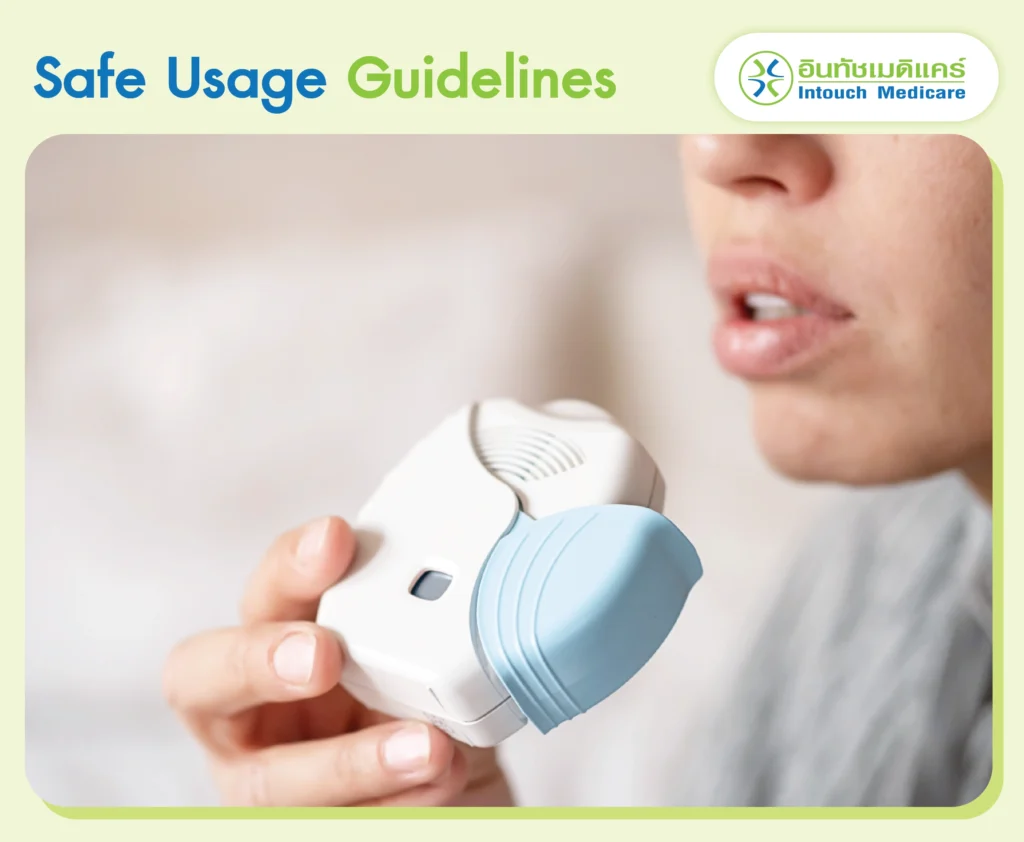
Can asthma inhalers be purchased for self-use?
You should not purchase asthma medication on your own without a proper diagnosis from a doctor. In addition, patients should attend every scheduled follow-up appointment, as the doctor needs to evaluate the effectiveness of the medication and adjust the treatment plan appropriately.
How to Use Asthma Medication
Safe Usage Guidelines
Medications should be used regularly and strictly according to your doctor’s instructions, and for the correct purpose based on the type of medication. For example:
- Controller medications should be used consistently as prescribed, not only during symptom flare-ups.
- After using an inhaler that contains corticosteroids, rinse your mouth with clean water every time.
Dosing frequency
There are several types of asthma medications, and the frequency of use varies depending on the specific medication, the severity of the disease, and each individual’s symptoms. Therefore, medications should always be used according to the treating physician’s instructions to ensure safety.
Is it safe to stop the medication without consulting a doctor?
You should not stop taking your medication on your own, even if there are no flare-ups. The doctor will determine whether and when it is appropriate to reduce the dosage.
Can asthma be completely cured with medication?
Asthma is a chronic condition. In some individuals, symptoms may resolve on their own; in others, the condition may recur, while some may recover completely and never experience symptoms again. However, some people may have persistent asthma long term. Medication helps reduce the frequency of symptoms, control the condition, relieve symptoms, and prevent exacerbations.
What Symptoms Indicate the Need for Asthma Medication?
Observe your symptoms carefully. If you have signs that may indicate asthma such as a persistent cough, wheezing, or shortness of breath, see a doctor as soon as possible for proper evaluation and diagnosis.
If asthma is confirmed, your doctor will determine the most appropriate treatment plan and prescribe the right medications for you. Do not buy asthma medication for self-treatment without a medical diagnosis, as this may be unsafe.

Conclusion
Asthma medications are divided into two main types: controller medications and reliever medications. Controller medications are used to prevent asthma symptoms in the long term, while reliever medications are used in emergency situations when asthma symptoms flare up.
Both types of medications should be used strictly according to a doctor’s instructions to ensure effective treatment and reduce the risk of severe symptoms.
“Patients should consult a doctor to properly evaluate the use of asthma medications. They should not change or stop their medication without medical advice, as this may increase the risk of poorly controlled asthma, which can negatively affect long-term quality of life.”


Read More Articles:
For more info and make appointment

Warangkana Vivulsirikul ,M.D.
General Practitioner
 Latest edit : 20/02/2026
 Images may be used without prior permission exclusively for educational or informational purposes, as long as proper credit is given to intouchmedicare.com