

 TH
TH
Foreign body removal from the eye is a procedure used to remove dust, sand, eyelashes, or other foreign materials that may cause eye pain, irritation, redness, or blurred vision. If the foreign body cannot be washed out, or if you have severe eye pain or blurred vision, you should see a doctor immediately. 
The procedure is performed using specialized instruments and usually takes only a short time. The cost typically ranges from a few hundred to a few thousand baht, depending on the case. Do not rub your eye or attempt to remove the foreign body yourself, as this may increase the risk of injury or infection. Our doctors have experience treating a wide range of cases, and most patients experience immediate relief after the foreign body is removed.
Important Information
- What should you do if a foreign body gets into your eye?
- What types of foreign bodies can get into the eye?
- Symptoms that require immediate medical attention
- Cost of foreign body removal from the eye

- First aid for a foreign body in the eye
- How doctors remove foreign bodies from the eye
- How long does foreign body removal take?
- Precautions when you have a foreign body in your eye
What Should You Do If a Foreign Body Gets into Your Eye?
If a foreign body gets into your eye, leaving it untreated or attempting to remove it yourself improperly may scratch the cornea, cause inflammation or infection, or leave a scar that can affect your vision in the long term.
You should see a doctor to have the foreign body removed using specialized instruments. The procedure is usually quick and can relieve symptoms promptly while helping prevent infection and corneal scarring.

What Types of Foreign Bodies Can Get into the Eye?
- Dust, sand, or ash
- Hair or eyelashes
- Dirt or mud
- Small insects
- Metal or wood fragments (commonly seen during metal cutting, grinding, or other construction and repair work)*
- Chemicals, such as toilet cleaner, glue, or cement*
*If metal fragments or chemicals get into your eye, seek medical attention immediately.
Symptoms That Require Immediate Medical Attention
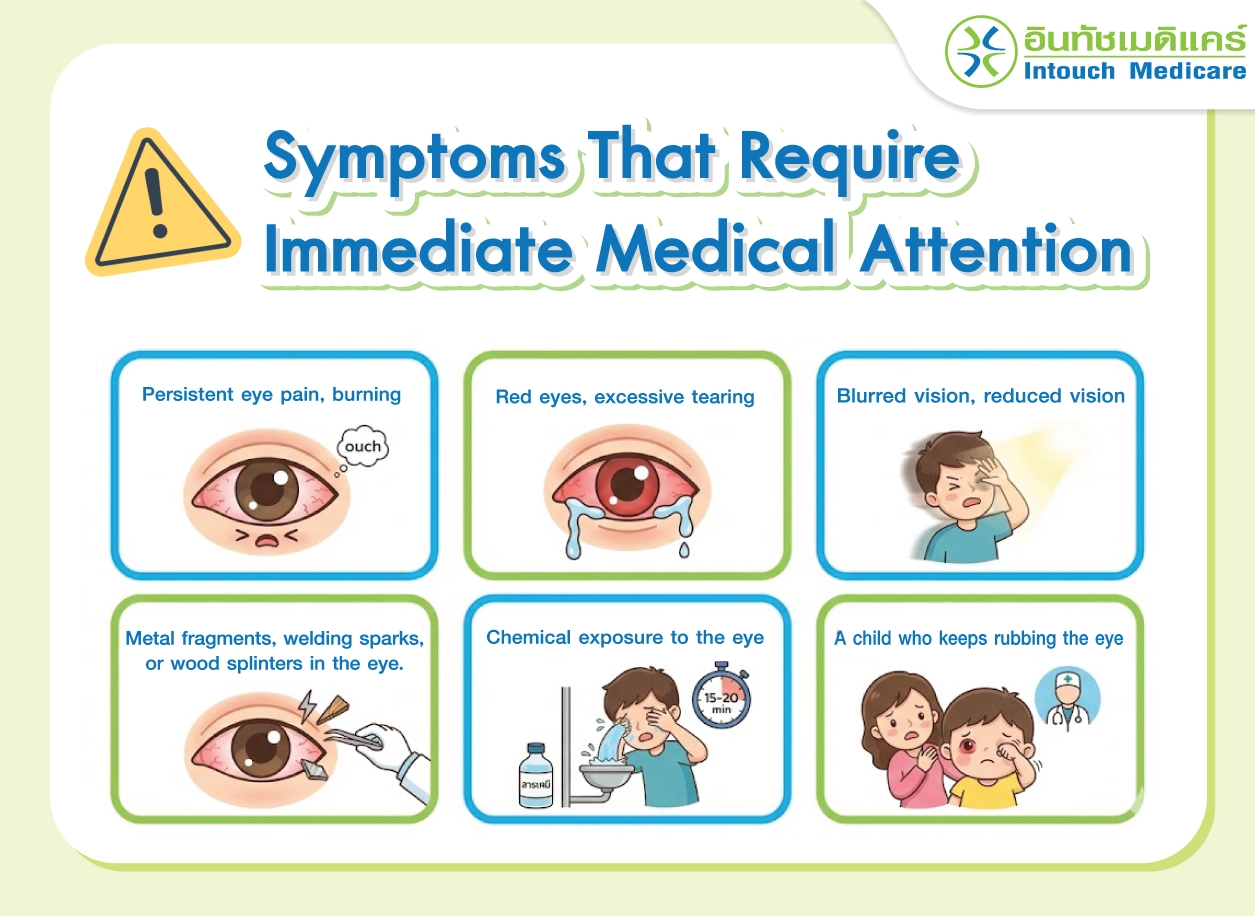
If you experience any of the following symptoms after a foreign body gets into your eye, seek medical attention immediately. These symptoms may indicate a corneal abrasion or increase the risk of an eye infection.
- Persistent eye pain, burning, or irritation even after rinsing the eye, with a constant sensation that something is still stuck in the eye.
- Red eyes, excessive tearing, or a persistent foreign body sensation, which may indicate ongoing inflammation or a retained foreign body.
- Blurred vision, reduced vision, or sensitivity to light, which may be a sign of a corneal abrasion.
- Metal fragments, welding sparks, or wood splinters in the eye. Do not attempt to remove them yourself. They should only be removed by a doctor.
- Chemical exposure to the eye. Rinse the eye immediately with clean water for 15–20 minutes, then seek emergency medical care.
- A child who keeps rubbing the eye, has red eyes, or refuses to open the eye, as this may indicate that a foreign body is trapped in the eye.
These symptoms require prompt evaluation and foreign body removal at a nearby clinic or hospital by a qualified doctor to ensure safe and appropriate treatment.
Cost of Foreign Body Removal from the Eye
- The cost of foreign body removal from the eye starts from 1,540 Baht

First Aid for a Foreign Body in the Eye
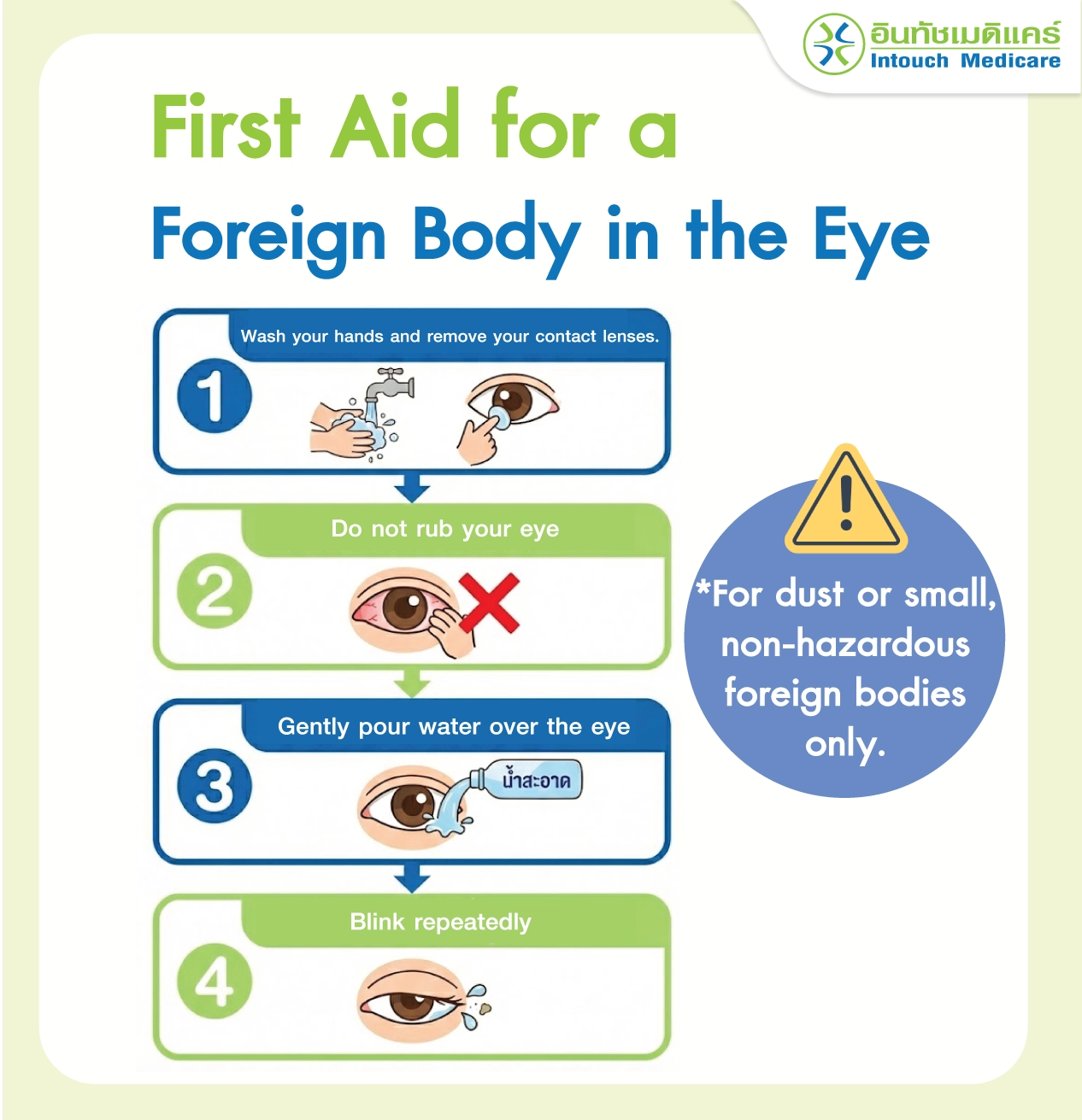
- Wash your hands thoroughly. If you are wearing contact lenses, remove them immediately.
- Rinse your eye with clean water or sterile saline solution. Do not rub your eye.
- Gently pour water over the eye, allowing it to flow across the surface.
- Blink repeatedly. Blinking stimulates tear production, which may help flush out small foreign particles.
*For dust or small, non-hazardous foreign bodies only.
How Our Doctor Removes a Foreign Body from the Eye
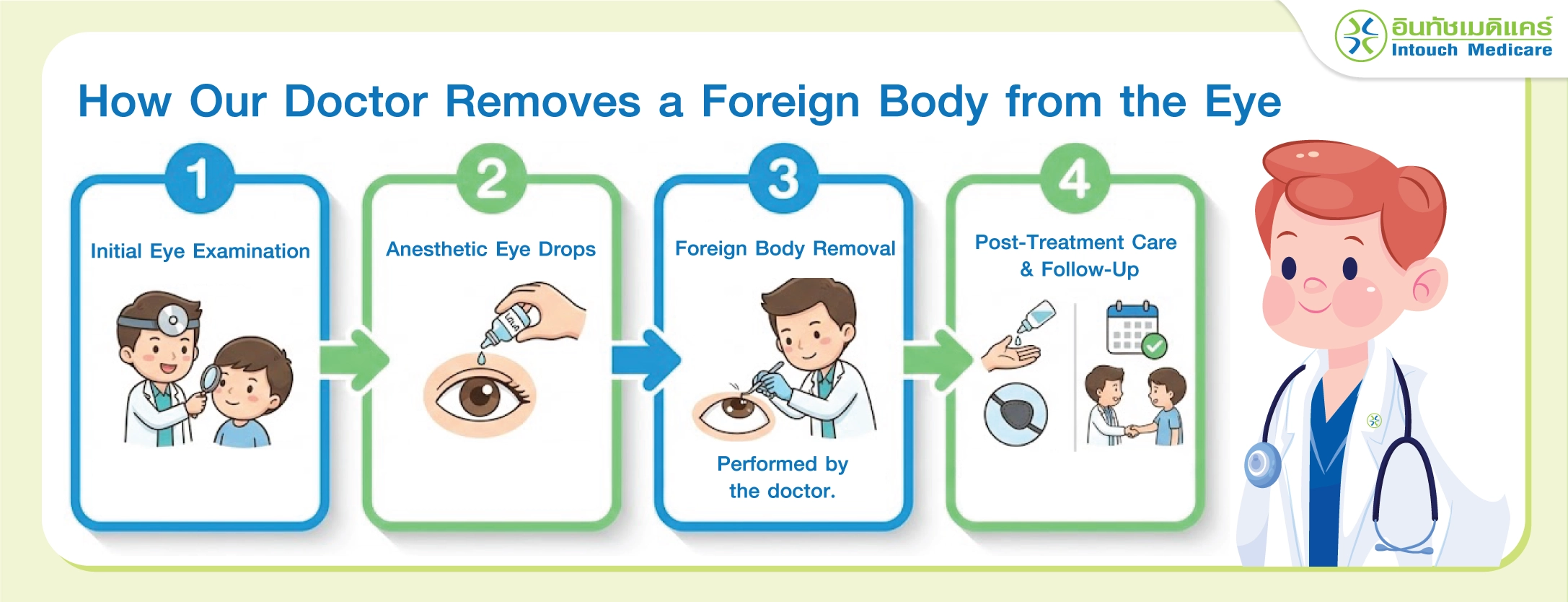
- The doctor assesses the condition of the eye and the foreign body to determine whether the patient is suitable for treatment. A vision test is also performed.
- Before removing the foreign body, the doctor applies anesthetic eye drops to reduce discomfort during the procedure.
- The removal method depends on the type of foreign body.
- Dust or chemicals: The doctor primarily irrigates the eye.
- Insects or large particles lodged on the conjunctiva: A sterile cotton tip is used to remove the foreign body.
- Metal fragments or dirt embedded in the cornea: A sterile needle is used to remove the embedded foreign body.
- After the foreign body has been completely removed, antibiotic eye drops and/or an eye patch are applied as appropriate for each patient, followed by a follow-up appointment.

How Long Does Foreign Body Removal from the Eye Take?
If the foreign body and its location can be clearly identified, and there is no severe corneal abrasion, the procedure is generally quick and usually takes no more than 30 minutes.
Precautions When You Have a Foreign Body in Your Eye
- Do not rub your eye! Rubbing the eye is one of the most common mistakes patients make. It can cause the foreign body to scrape the cornea, resulting in a corneal abrasion, severe pain, an increased risk of infection, and more difficult treatment.
- Do not attempt to remove the foreign body yourself, especially with a needle. The eye is highly sensitive, and attempting to remove the foreign body yourself may cause further injury.
- If chemicals get into your eye, rinse the eye immediately according to the first aid instructions.
- Do not delay treatment. Delaying treatment can lead to eye inflammation. This is especially important for metal fragments. If left in the eye overnight, they may rust and penetrate the cornea, making treatment more difficult and potentially causing permanent corneal scarring.

Jittiwat Amnouypon, MD Medical License No.58622
– Clinic Physician –
The Doctor’s Clinical Experience
“The most common cases I see are patients who grind or cut metal without wearing safety glasses. They feel as though something has flown into their eye but assume it is only dust, so they rub their eye and continue working. Later, they develop severe eye pain, excessive tearing, and sensitivity to light.
After removing the metal fragment embedded in the cornea and prescribing eye drops, the patient recovered completely.”
For more info and make appointment

Jittiwat Amnouypon ,M.D.
General Practitioner
 Latest edit : 21/08/2026
 Images may be used without prior permission exclusively for educational or informational purposes, as long as proper credit is given to intouchmedicare.com