

 TH
 MM

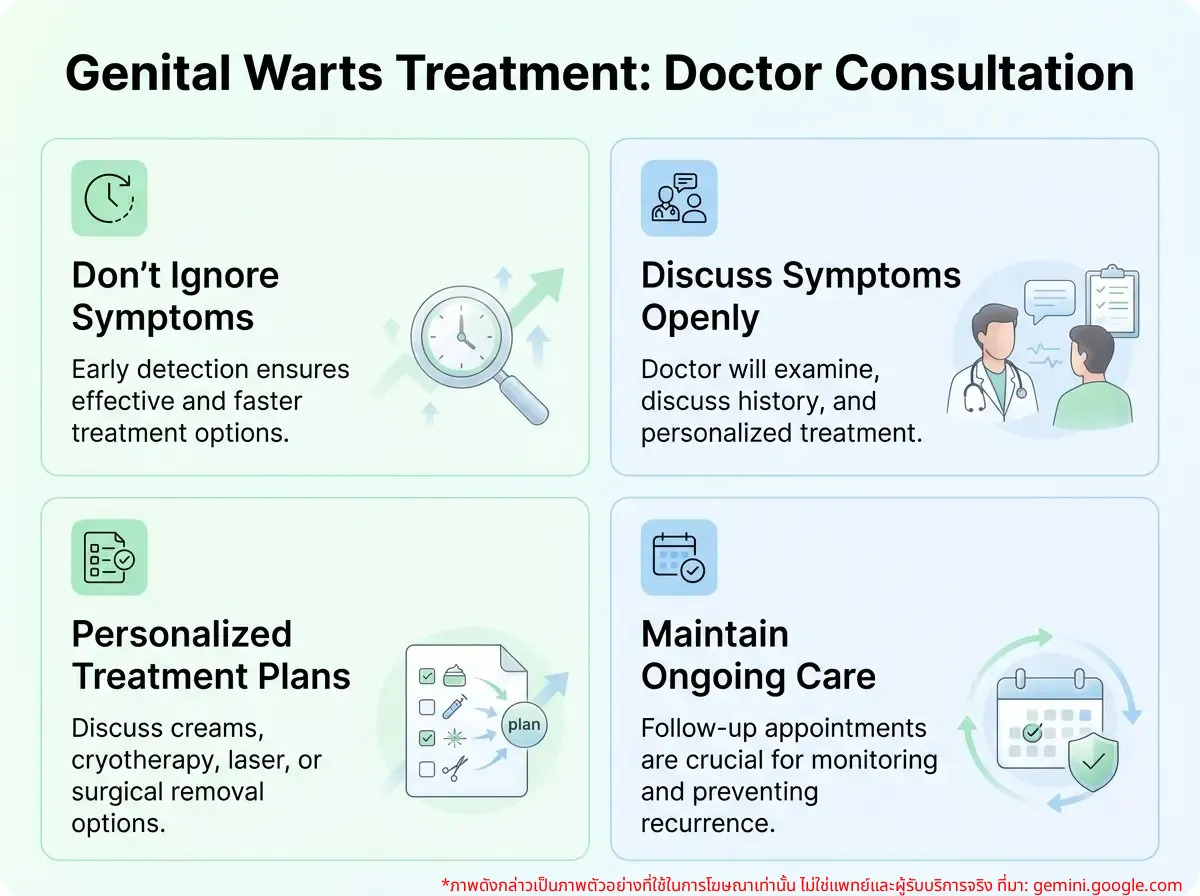
Genital warts are a common sexually transmitted infection caused by the Human Papillomavirus (HPV). Appropriate treatment is crucial, not only for the patient’s health but also to prevent the spread of infection to others.
This article provides in-depth information on the main genital warts treatments commonly used today: cryotherapy, electrosurgery, and topical medications. It aims to help you thoroughly understand the mechanisms, advantages, disadvantages, and considerations of each method, enabling you to make an informed decision on the most suitable treatment for yourself under the guidance of a medical specialist.
1. What are Genital Warts and Do They Need Treatment?
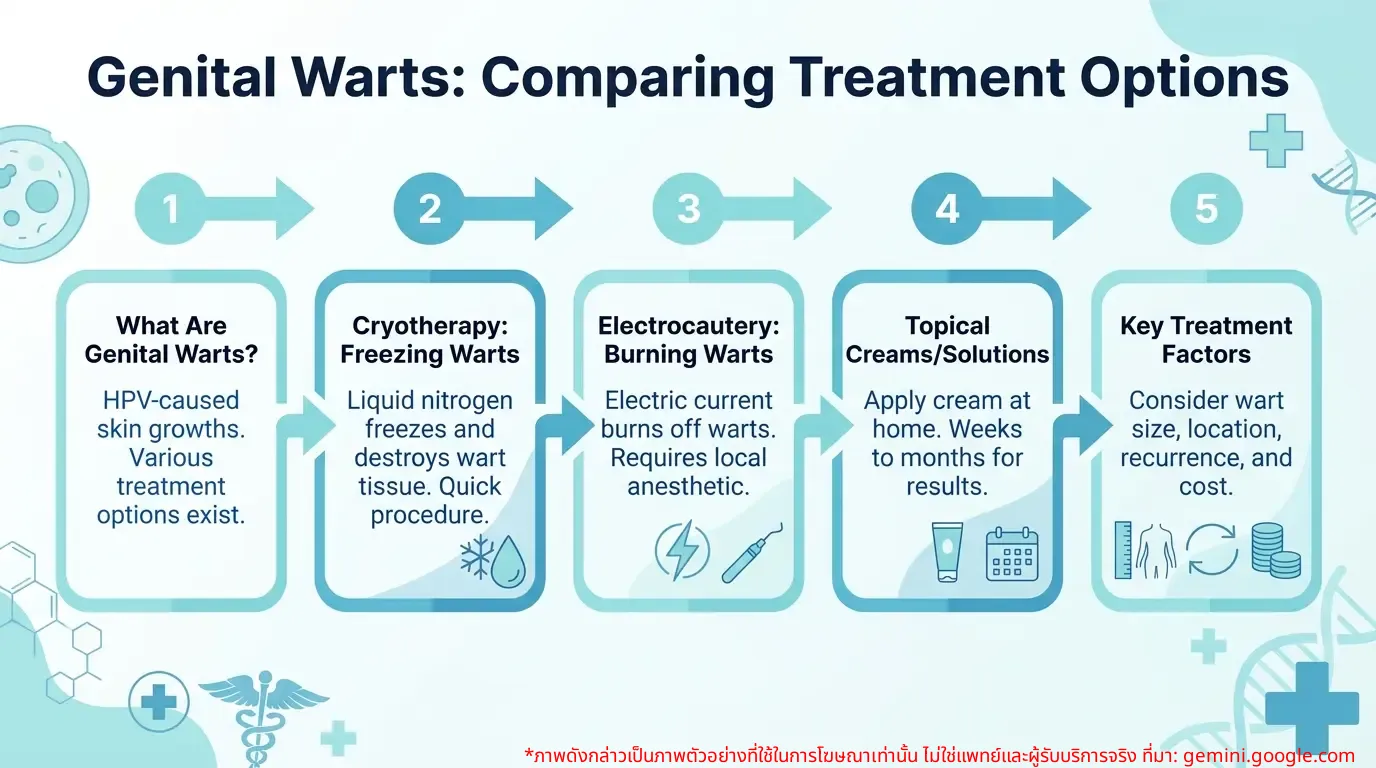
Genital warts are small growths or lumps that appear in the genital or anal area. They are caused by infection with low-risk strains of Human Papillomavirus (HPV), primarily types 6 and 11. Transmission usually occurs through sexual contact with an infected person.
Patients may experience itching, irritation, or minor bleeding around the warts. Some may have no symptoms at all. Warts vary in appearance, from tiny pinhead-sized bumps to large, cauliflower-like growths, and can be solitary or clustered.
Treating genital warts is important for several reasons:
- Reduce symptoms: Alleviate itching, irritation, and discomfort caused by warts.
- Prevent transmission: Reduce the chance of spreading HPV to sexual partners.
- Prevent complications: Although most genital warts do not become cancerous, treating them is good long-term health care and reduces risk if high-risk strains are also present.
- Improve quality of life: Reduce anxiety and boost confidence in daily life.
2. What is Genital Warts Treatment with Cryotherapy?
Cryotherapy is a treatment that uses extremely cold liquid nitrogen (approximately -196 degrees Celsius) sprayed or applied to the genital warts. The intense cold causes the wart cells to freeze and eventually die. The warts will then gradually peel off on their own.
Advantages of Cryotherapy:
- Less painful: Generally, there is minimal pain during and after the treatment.
- Fast healing: Wounds typically dry and heal quickly.
- No anesthesia required: For small warts.
- Low risk of scarring: As it destroys only localized tissue.
Disadvantages of Cryotherapy:
- May require multiple sessions: Some warts may not clear up in a single treatment and require several repeat sessions, typically 1-2 weeks apart.
- Side effects: May include redness, swelling, blistering, or mild pain after treatment, which usually resolves within a few days. Temporary darkening of the skin may also occur.
Cryotherapy is suitable for small to medium-sized genital warts that are not excessively large or numerous. It is a popular method due to its straightforward procedure and minimal side effects.
💡 Did you know? HPV vaccination can prevent infection with several HPV strains, including those that cause genital warts and some that cause cervical cancer. Early prevention is therefore key to good health.
The Importance of Preventing Genital Warts with HPV Vaccine
From the information above, it is clear that preventing HPV infection is the best way to avoid genital warts and reduce the risk of HPV-related cancers. HPV vaccines are widely recognized as highly effective in preventing infection with the main disease-causing viral strains. Consult a doctor for advice on appropriate vaccination based on age and individual risk factors.
In addition to vaccination, safe sexual practices, such as correct condom use and regular health check-ups, are also crucial for effectively reducing the risk of infection and other sexually transmitted diseases.

3. What is Genital Warts Treatment with Electrosurgery?
Electrosurgery is a treatment that uses high-frequency electrical current delivered through a small, pointed instrument to destroy and remove wart tissue. The heat from the electrical current helps to coagulate blood in the wound area, reducing bleeding and the risk of infection.
Advantages of Electrosurgery:
- Effective for large warts: Can effectively remove large or numerous warts in a single treatment session.
- Depth control: Doctors can precisely control the depth of tissue destruction.
- Lower recurrence rate: Compared to cryotherapy in some cases, as it destroys the wart tissue down to its root.
Disadvantages of Electrosurgery:
- Potential for scarring: Higher chance of scarring compared to cryotherapy, especially in delicate skin areas.
- Longer recovery time: Wounds may take longer to heal and require more care than with cryotherapy. Post-procedure soreness may occur.
- Anesthesia required: Patients will need local anesthesia before the procedure.
- Burning odor: A burning odor may be present during the procedure, which is normal.
Electrosurgery is suitable for large, numerous, or treatment-resistant genital warts. It is a good option when clear and rapid results are desired.
4. What are the Topical Medications for Genital Warts Treatment?
Topical medications are a non-surgical treatment that patients can apply at home under a doctor’s guidance. Each type of medication has different mechanisms of action and limitations.
Commonly Used Topical Medications:
1. Imiquimod:
- Mechanism of action: Stimulates the body’s immune system to produce substances that help eliminate the virus and wart cells.
- Advantages: Can be applied at home, reducing the need for frequent doctor visits, and has a lower chance of recurrence if used as prescribed.
- Disadvantages/Side effects: May cause redness, itching, swelling, irritation, or sores in the treated area. Typically requires continuous use for several weeks (3-5 times per week for up to 16 weeks).
2. Podophyllotoxin:
- Mechanism of action: Inhibits the division of wart cells, causing them to die and peel off.
- Advantages: Can be applied at home, with relatively fast results.
- Disadvantages/Side effects: May cause irritation, burning redness, or abrasions in the treated area. Not to be used by pregnant women, and should not be applied to mucous membranes or large warts.
3. Trichloroacetic acid (TCA):
- Mechanism of action: An acid that directly destroys wart cells, causing proteins in the cells to coagulate and die.
- Advantages: Fast results for small warts. Can be applied by a doctor in the clinic.
- Disadvantages/Side effects: May cause severe burning if applied to normal skin. There is a risk of chemical burns or hyperpigmentation. Must be performed by a medical professional.
Limitations of topical medications include their unsuitability for very large or numerous warts, or warts in hard-to-reach areas such as inside the vagina or anus. Consistent application is also required for optimal results.
The choice of topical medication should be closely discussed with a doctor or pharmacist to ensure it is appropriate and to prevent side effects from incorrect use.
5. Comparing Pros and Cons: Cryotherapy, Electrosurgery, and Topical Medications – Which Method is Right for Whom?
To help you easily understand the differences between each treatment method, refer to the summary table comparing advantages, disadvantages, and suitability:
| Feature | Cryotherapy | Electrosurgery | Topical Medications |
|---|---|---|---|
| Principle | Uses liquid nitrogen to destroy wart cells with extreme cold | Uses high-frequency electrical current to destroy and remove wart tissue | Medication stimulates immune system or directly destroys wart cells |
| Advantages | Less painful, fast healing, low risk of scarring | Effectively removes large/numerous warts, controllable depth | Self-application at home, convenient, non-surgical |
| Disadvantages | May require multiple sessions, potential for blistering | Potential for scarring, longer recovery, requires local anesthesia | Requires prolonged use, potential for irritation, not suitable for large warts |
| Treatment Duration | Multiple sessions (1-2 weeks/session) | Usually one session (but longer recovery) | Several weeks to months |
| Pain Level | Mild-Moderate | Requires local anesthesia; post-procedure soreness may occur | Mild-Moderate (depending on medication type) |
| Side Effects | Redness, swelling, blistering, temporary skin darkening | Pain, swelling, redness, scarring, infection | Irritation, burning, redness, itching, peeling |
| Cost | Moderate (depends on number of sessions) | Higher (usually one-time procedure) | Lower (but requires continuous use) |
| Suitable for | Small-to-medium warts, not numerous | Large, numerous, or treatment-resistant warts | Small-to-medium warts, not numerous, in less sensitive areas |
Choosing the most suitable treatment method should consider various factors, and most importantly, consulting a medical specialist for accurate diagnosis and a correct, safe treatment plan.
The best decision will come from understanding this information and consulting with an experienced doctor to assess the condition of your warts and your overall health.
6. Key Factors in Choosing the Right Genital Warts Treatment for You
The decision to choose a genital warts treatment method should be made carefully, considering the following key factors:
- Size and location of warts: Small warts in less sensitive areas may be suitable for cryotherapy or topical medications, while large or deep warts may require consideration of electrosurgery.
- Number and severity of warts: If there are many warts or they are widely spread, electrosurgery may be more effective than multiple cryotherapy sessions or prolonged use of topical medications.
- Overall patient health: Patients with compromised immune systems may require more aggressive treatment or may experience recurrence more easily.
- Budget: The cost of each treatment method varies. Discuss costs with your doctor and consider what is appropriate.
- Treatment convenience and recovery time: If convenience and self-application are desired, topical medications may be a good choice. However, if quick results are preferred and frequent doctor visits are to be avoided, electrosurgery may be more suitable, despite requiring recovery time.
- Patient expectations: Some patients may be concerned about scarring, while others may want the least painful method. Discussing and communicating your preferences with your doctor is important.
- Expert medical advice: The doctor will consider all information, including their experience and expertise, to recommend the most suitable and safest method for you.
It is crucial to have an open and detailed discussion with your doctor so they can assess your condition and provide the best advice for satisfactory treatment outcomes and reduced chances of recurrence.
7. Self-Care After Treatment and Preventing Recurrence
Even after genital warts have been treated, continuous self-care and preventing recurrence are equally important for maintaining good health and preventing the spread of infection:
- Wound care after treatment:
- Keep the wound area clean as advised by your doctor.
- Avoid picking, scratching, or rubbing the wound area.
- Apply antiseptic or other medications as prescribed by your doctor to prevent infection.
- Monitor for abnormal symptoms such as redness, swelling, pus, or severe pain. If these symptoms occur, promptly return to your doctor.
- Practices to reduce the risk of re-infection and transmission:
- Abstain from sexual activity: Refrain from sexual intercourse during treatment or until the wound has fully healed and your doctor permits.
- Use condoms: If resuming sexual activity, always use condoms to reduce the chance of transmitting and re-acquiring the infection. While condoms are not 100% effective, they significantly reduce the risk.
- Inform your partner: You should inform your sexual partner about the condition so they can get tested and receive appropriate treatment if necessary.
- Avoid sharing personal items: Such as towels or razors.
- Importance of follow-up with a doctor:
- Since HPV may remain in the body and warts can recur, regular follow-up appointments with your doctor are crucial to check for new warts and plan ongoing care.
- HPV vaccination:
- If you have not yet received the HPV vaccine or have not completed the full course, vaccination is the best way to prevent new infections and reduce the risk of future recurrence.
Adhering strictly to your doctor’s advice and consistently taking care of your health will help you maintain a good quality of life and sustainably reduce concerns about genital warts.

There are various methods for treating genital warts, including cryotherapy, electrosurgery, and topical medications, each with different advantages, disadvantages, and suitability. Understanding each method will help you confidently choose a treatment approach that aligns with your physical condition, wart size, and personal needs.
The most important thing is to consult a medical specialist for an accurate diagnosis and appropriate advice. Your doctor will help assess your situation and plan a safe and effective treatment, allowing you to return to a happy life free from worry.
If you are facing issues with genital warts and require consultation from an experienced doctor, you can contact or schedule an appointment through the clinic’s channels for professional healthcare and access to the most suitable treatment for you.
Related Articles
- Genital Warts: An HPV-related Sexually Transmitted Infection
- Why Do Genital Warts Recur? Treatment, Prevention, and HPV Vaccine
- Genital Warts in Men and Women: Symptoms, How to Observe, and Prevention
- Self-Care for Genital Warts: It’s Not Difficult!
- What are Warts? Common Warts, Plantar Warts, Genital Warts: What’s the Difference?