

 TH
TH MM
MM
Morning sickness — including nausea and vomiting — is a common symptom experienced by almost all pregnant women to varying degrees. While it’s usually not dangerous, severe symptoms may require medical attention to ensure the health and safety of both the mother and the baby.
If you experience severe morning sickness, it’s best to visit your obstetrics and gynecology clinic for proper evaluation and treatment. A doctor can provide personalized advice to help you manage symptoms safely.
Interesting Topics About Morning Sickness
- What Causes Morning Sickness?
- What Does Morning Sickness Feel Like?
- Early Signs of Morning Sickness in the First Week

- When Does Morning Sickness Start?
- How Many Months Does Morning Sickness Last?
- How to Cope With Morning Sickness

- How to Relieve Nausea During Pregnancy
- When to See a Doctor for Severe Morning Sickness


Read more : Obstetrics and gynecology clinic, prenatal clinic
What Does Morning Sickness Feel Like?
Pregnant women may notice several common symptoms of morning sickness, such as:
- Nausea

- Vomiting
- Dizziness
- Changes in appetite (craving or avoiding certain foods)
- Heightened sensitivity to smells or aversion to specific scents
Many women experience the most intense symptoms in the morning because, as mentioned earlier, hCG levels are highest during this time of day — which can trigger nausea and vomiting more easily.

Early Signs of Morning Sickness in the First Week

In the first week of pregnancy, morning sickness can often be noticed through a missed period, accompanied by symptoms such as nausea and vomiting. This happens because the body has started producing human chorionic gonadotropin (hCG) and developing the placenta.
Read more : Types of Pregnancy Tests and How Soon You Can Get Accurate Results
Antenatal Care at Intouch Medicare — Click HereWhen Does Morning Sickness Start?
Most pregnant women begin to experience morning sickness around 5–6 weeks of pregnancy. This is the time when human chorionic gonadotropin (hCG) levels start to rise significantly in the body.
How Many Months Does Morning Sickness Last?
For most pregnant women, morning sickness gradually improves or disappears between 12 and 16 weeks of pregnancy. This is because hCG levels begin to decrease around the 16th week, which helps reduce nausea and vomiting symptoms.
How to Cope With Morning Sickness
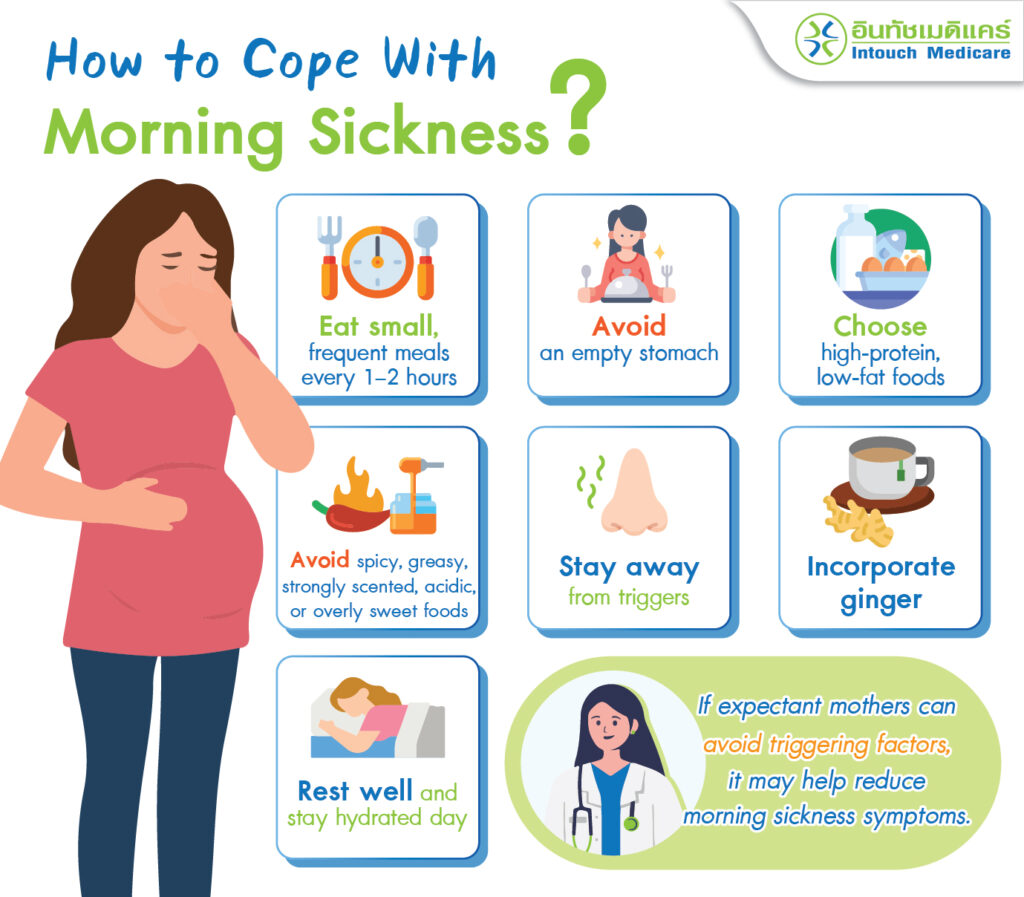
For pregnant women experiencing nausea and vomiting, it’s important to first assess the severity of the symptoms. If the symptoms are mild, certain lifestyle and dietary adjustments can help relieve discomfort, such as:
-
Eat small, frequent meals every 1–2 hours to prevent an overly full stomach.
-
Avoid an empty stomach
 , as this can trigger nausea.
 -
Choose high-protein, low-fat foods such as crackers, toast, or other dry snacks.
-
Avoid spicy, greasy, strongly scented
 , acidic, or overly sweet foods that may worsen nausea.
-
Stay away from triggers like strong odors, heat, humidity, loud noises, or flashing lights.
-
Incorporate ginger
 (such as ginger tea or ginger candies), which can naturally help reduce nausea.
 -
Rest well and stay hydrated throughout the day.

How to Relieve Nausea During Pregnancy
If you feel nauseous during pregnancy, try to avoid triggers such as strong smells, loud noises, heat, or certain types of food that can make the feeling worse. If lifestyle adjustments and avoiding triggers don’t help relieve the symptoms, it’s best to see your doctor for further guidance.
Your doctor may recommend safe treatment options, including vitamin B6 supplements or other medications to help ease your nausea and keep you comfortable during pregnancy.
When to See a Doctor for Severe Morning Sickness
If you experience persistent and severe nausea and vomiting that prevents you from eating or drinking properly, leads to dehydration, or causes significant weight loss (more than 5% of your pre-pregnancy weight), you may be experiencing a serious condition called hyperemesis gravidarum.
This condition can lead to electrolyte imbalances, thyroid hormone abnormalities, and liver dysfunction, which can be dangerous for both mother and baby.
If these symptoms occur, it’s crucial to seek medical attention immediately to ensure proper treatment and prevent complications.

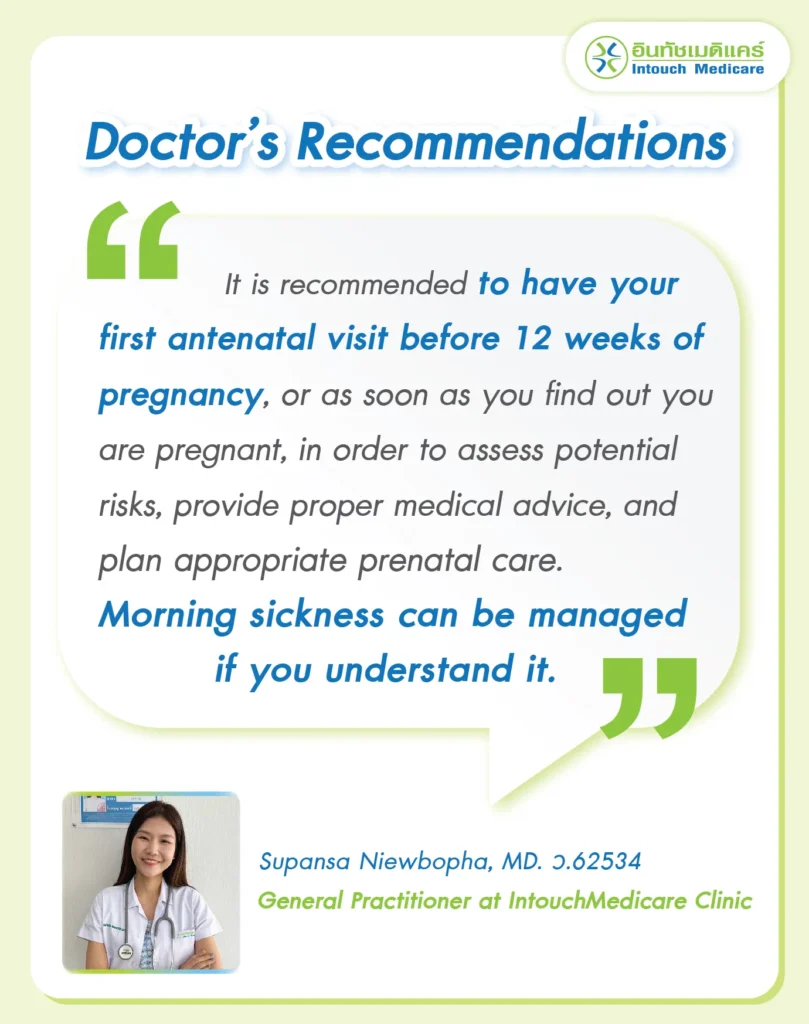
“It is recommended to have your first antenatal visit before 12 weeks of pregnancy, or as soon as you find out you are pregnant, in order to assess potential risks, provide proper medical advice, and plan appropriate prenatal care.
Morning sickness can be managed if you understand it.”
– SUPHANSA NIAWBUPHA, MD. ว.62534 (General Practitioner (GP) at the Clinic) –
Interesting Articles
- Obstetrics and gynecology clinic, prenatal clinic
- Types of Pregnancy Tests and How Soon You Can Get Accurate Results
- What does each prenatal checkup involve? Know before your first prenatal visit
- How to Take Care of Yourself in Early Pregnancy or When You Find Out You Are Pregnant
For more info and make appointment

Suphansa Niawbupha ,M.D.
General Practitioner
 Latest edit : 27/10/2025
 Images may be used without prior permission exclusively for educational or informational purposes, as long as proper credit is given to intouchmedicare.com
Auto translator