

 TH
TH MM
MM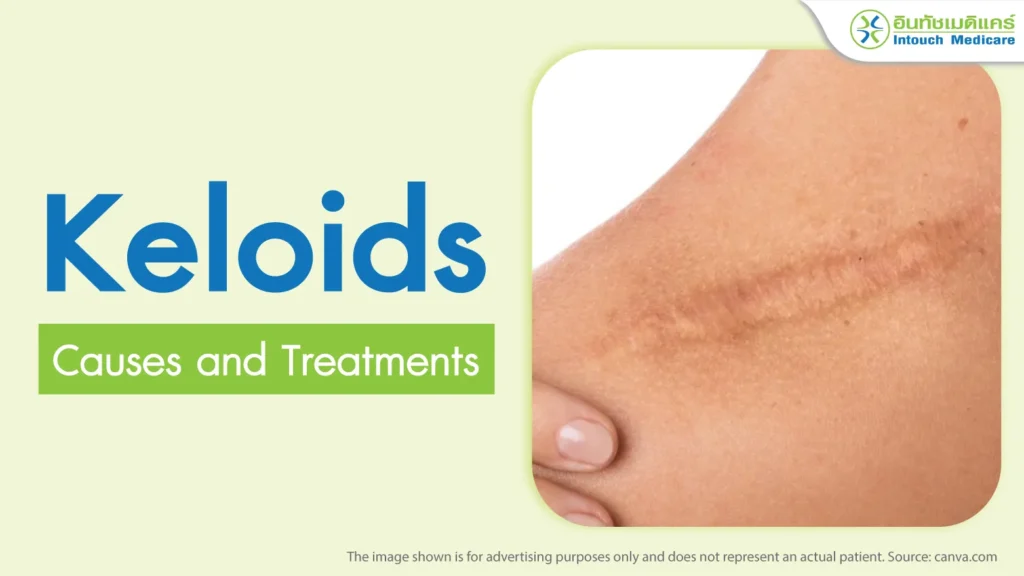
Keloids are raised scars resulting from excessive growth of scar tissue beyond the original wound boundaries. They often develop after skin injuries like incisions, piercings, or even acne.
Keloids, which are raised and thickened scars, generally don’t heal on their own and can even grow larger if left untreated. However, various treatments can help reduce their size and improve their appearance. Let’s explore them in this article.
- What are keloids?
- Causes of keloids
- Characteristics and symptoms of keloids
- Early signs of keloids
- Keloid treatments
- Can keloids heal on their own?
- Are keloids curable?

- Where is the best place to get keloid treatment?

What are keloids?
Keloid scars are raised, thickened areas of scar tissue that extend beyond the original wound boundaries. For example, a small 1 cm wound could potentially result in a keloid scar of 20 cm. They can be different colors, from dark to red, and may appear as a bruise. Keloids can appear soon after a wound heals or even months later.
While not inherently dangerous, they can cause itching, burning, or discomfort, and may also be aesthetically unappealing.
Causes of keloids
Keloids are caused by a variety of factors, primarily an overproduction of collagen during the body’s wound healing process. Normally, collagen helps repair and rebuild skin, but in keloid formation, the body produces excessive amounts, leading to raised, thickened scars that extend beyond the original wound area.
They can develop from a variety of causes, including burns, surgical wounds, accidental cuts, chickenpox scars, and even from picking or squeezing pimples.

Characteristics and symptoms of keloids
-
While keloids can develop anywhere on the body where there’s been a skin injury, certain areas are more prone to their formation. These include earlobes, neck, shoulders, chest, and back.

-
Keloids often develop after a scar forms from various types of skin injuries. These injuries can include surgical incisions, burns, accidents, chickenpox, or even inflammation from picking at a pimple.
-
Keloids often begin as raised, pink or purple scars and can change color over time, becoming either lighter or darker than the surrounding skin.
-
Keloids are raised, firm, smooth, and shiny scars that often appear hairless.
-
Keloid scars, while not dangerous in terms of systemic health, can cause significant discomfort. They often itch, burn, and can be painful, especially when irritated by rubbing or during the winter. Scratching can exacerbate the symptoms and potentially lead to more severe soreness or even infection.
-
Keloid scars, if left untreated, can persist for many years, and in some cases, permanently. They may appear immediately after the initial wound heals or emerge months or even years later.

Keloid treatments
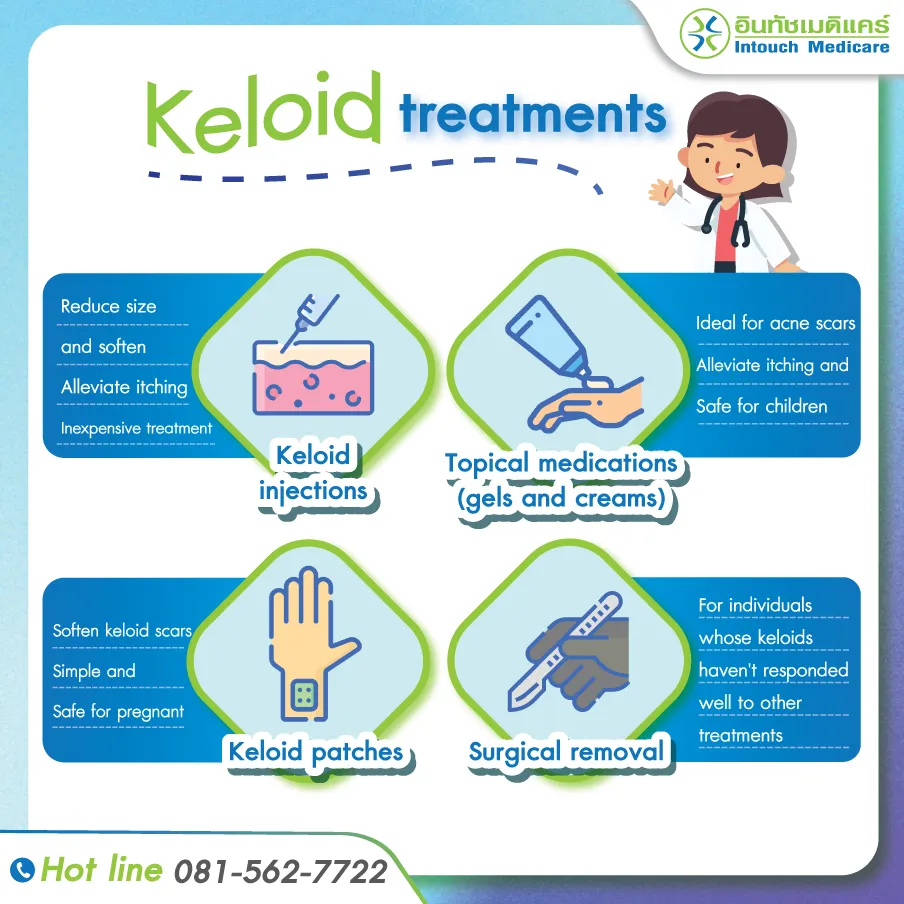
There are indeed various methods to treat keloids, with the common goal of reducing their visibility and addressing symptoms like itching, pain, and discomfort. These treatments include medications, injections, and other approaches aimed at minimizing the appearance of raised scars resulting from burns, surgical incisions, or other injuries.
- Keloid patches can be an effective method for reducing the appearance of raised keloid scars, both old and new. They work by maintaining hydration in the scar area, which helps to flatten the scar and lighten its color. Pregnant women can also use these patches, as they are generally considered safe for topical use.
-
Topical medications, including gels and creams, can help improve the appearance of acne scars by promoting tissue healing and reducing scar visibility. These medications work by encouraging skin cell turnover, collagen production, and can also address discoloration and textural issues.
-
Keloid injections are a common and effective method for treating keloid scars. This treatment involves injecting medication directly into the keloid area to reduce inflammation and shrink the scar tissue. The healing process varies depending on how the keloid responds to the medication, and your doctor will likely schedule monthly injections until you see satisfactory results (available at Intouch Medicare).
-
Cryotherapy, or cold therapy, can indeed help flatten keloid scars, especially smaller ones. This method involves exposing the scar to extreme cold, typically using liquid nitrogen, to freeze and destroy abnormal scar tissue. It’s often used in conjunction with other treatments like steroid injections (available at Intouch Medicare).
-
Surgical removal, a method involving surgical excision to reduce the size of a keloid, can be effective and quick for smaller wounds that can be stitched, but it’s crucial to have it performed by a skilled physician.
Can keloids heal on their own?
Keloids do not typically heal on their own and can worsen over time, especially in individuals prone to them. Therefore, seeking medical treatment is recommended to manage their size and appearance.
Are keloids curable?
Keloids can be reduced in size and appearance through various treatments, but they cannot be completely cured and may recur. The most effective approach often involves a combination of treatments tailored to the individual keloid and patient.
Where is the best place to get keloid treatment?
Hospitals with dermatology or plastic surgery departments, keloid injection clinics, and skin or plastic surgery clinics are generally the best places for keloid treatment. These facilities often have specialized expertise and resources for managing keloids, which are raised, overgrown scars.
Keloid treatment is not one-size-fits-all; it varies based on individual factors like keloid size, shape, and age, as well as the patient’s age. A doctor must assess the specific keloid to determine the most appropriate treatment plan, which may include corticosteroid injections, surgery, or other methods.
You can find a nearby Intouch Medicare Clinic location that offers diagnosis and treatment for keloid scars by searching for “Clinic Near Me” on Google or by contacting us via our website. We guarantee the greatest treatment outcomes with convenient procedures, reasonable costs, and specialized physicians and state-of-the-art equipment.
Interesting Articles
- Wart Removal, Skin Tag Removal, and Keloid Scar Treatment
- What Causes Warts? How Can They Be Treated?
- Skin Tags: Causes, Risks and Treatments
For more info and make appointment

Mr.Achawin Thamsoonthorn
General Manager
 Latest edit : 16/02/2026
 Images may be used without prior permission exclusively for educational or informational purposes, as long as proper credit is given to intouchmedicare.com